I wonder if anyone’s ever done a study to see when gyms are more crowded—in January (post new year’s resolution season) or in the spring (pre swimsuit season). I’d put my money on January.


I wonder if anyone’s ever done a study to see when gyms are more crowded—in January (post new year’s resolution season) or in the spring (pre swimsuit season). I’d put my money on January.
Our clients are some of the most successful, creative people in the planned giving community. We asked them what they’re grateful for, and here’s what they said. (Feel free to steal their ideas at your family feast on Thanksgiving.)
Originally published July 30, 2015. Updated for 2025. Summary: Why Benefits Always Win When it comes to planned giving marketing success, it’s not about the features—it’s about the emotional and personal benefits for the donor. That was the takeaway from a lively webinar featuring Viken Mikaelian and Tom Ahern, two industry veterans in donor engagement strategies. If you missed it, the recording will be available soon at PlannedGiving.guru. From Real Estate to Philanthropy I came to planned giving from the world of real estate, bringing along a few key marketing principles. One of my favorites: “Never write to a donor what you can tell them on the phone or in person; and never tell them something that you are able to show them.” And perhaps the most important of all: “Highlight benefits, not features.” What Really Sells a Gift? Benefits. In real estate, you can list the features: three bedrooms,

Two Hebrew phrases help explain why Jewish giving is so high. Two women pass a beggar on the street. Both women have the exact same income and expenses. The first weeps at the suffering of the beggar and gives him $5 out of the goodness of her heart. The second notices but rushes past. Later in the day, however, she feels compelled because of her religious beliefs and returns to give the beggar $100. Who is the better person? Why are Jews so generous? Many people who are not familiar with the Jewish community are often surprised at the large annual gifts that Jewish Federations and other Jewish non-profit organizations receive year in and year out. Are Jews more generous than other people? Have Jewish organizations cooked up some kind of secret fundraising sauce? I have been privileged to work with the Jewish Federation of Cincinnati for twelve years and
Once upon a time in a market far, far away, I worked at FORTUNE Magazine. In retrospect, selling advertising in FORTUNE had a lot of similarities to fundraising. It was a great magazine with a specific editorial mission that competed for dollars with a lot of other fine magazines and newspapers. During my time there, an editorial colleague posed this fascinating question: “What are the sexiest six words in advertising?” I’ve never forgotten how he answered it and have made it one of my fundraising mantras to live by.

Most Donors Support Multiple Charities—And That’s a Good Thing Did you know the average donor gives to about ten charities per year? But here’s the real kicker: their top three or four nonprofits usually receive the lion’s share of their charitable giving. Now, I’ll be honest—I’ve never had the privilege of working for someone’s “favorite” charity. You know, that one nonprofit that lives rent-free in a donor’s heart and wallet. But I’ve never let that bother me. Why? Because I never subscribed to a scarcity mindset. I’ve always leaned hard into what I call the abundance mentality. From Scarcity to Abundance: A Shift in Mindset The scarcity mindset says, “If we don’t get the entire gift, we lose.” It’s competitive. It’s fearful. And frankly, it’s unrealistic. The abundance mentality says, “There’s enough to go around—especially when we help donors unlock hidden wealth.” There’s room for every organization that resonates with

It’s a decades-old dispute over which term, “Planned Giving” or “Gift Planning,” gives you the edge when reaching out to your prospects.
You can play it vanilla, or you can be heard. What will you choose? Edgy planned giving marketing gets results.
The classic cry of the binge marketer is “Oops… business is slow. I guess I’d better do some marketing and send out a mailing.” If you find yourself in the middle of a quiet spell, thinking that a few actions, a couple of phone calls and a mailing here and there will get things moving again, you need to rethink your strategy.
You’d never guess by looking at Thomas Chandler Cruikshank Bond, III, that he battled drug addiction for two decades, that he was jailed half a dozen times, or that he spent four years living in abandoned houses in East Baltimore. In fact, even if you had met him during most of those dark years, you never would have guessed what was really going on under his façade. He had a good job with an expense account, wore a suit and tie and drove a nice car. But, he says, “inside I was a wreck, miserable.” By 2002, Tom had been homeless or jailed for the past four years. He was injecting heroine and cocaine and had wasted away to 150 pounds. “I really thought I’d end up dying in the projects of Baltimore,” he says. Then, during yet another stint in jail, Tom heard (for the third time) about the
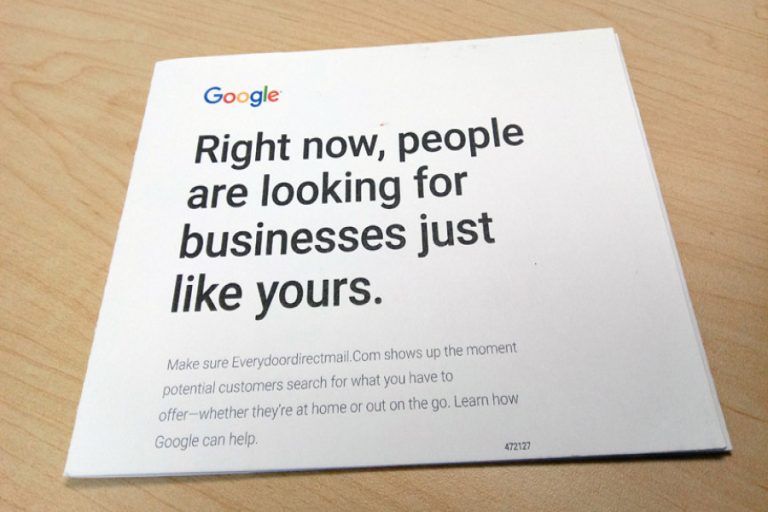
So it’s settled. Direct mail is a good idea. My husband and I run a small business. A very small business. So I was a little surprised to find out that we’re on Google’s mailing list. I’d understand if they sent me an email, or maybe a personalized video pop-up on YouTube. But no … the King of the Internet sent me a good old-fashioned letter, in a paper envelope, with a stamp, delivered by the postman. Yes, direct mail.
With the presidential election behind us and the status quo retained, what does this mean for charitable giving as we approach year-end? Over the last three months, this was the number one question on people’s minds – “What happens if after the election, we have the same parties in control of the House, Senate and Presidency? After all, there were lots of tax reform proposals out there during the campaign and we are about to go over the ‘Fiscal Cliff.’” While we don’t have a crystal ball, we are certain about three things which should shape how you approach year-end 2012 and the start of 2013.
Making Estate Planning Accessible, Simple, Personal, Secure and FREE!
Bequests are up, cash is down. Empower your donors to plan their will and invest their legacy in the cause they support the most.